Blue, grey, green and brown: four tweeds, four very different characters, and all of them look their best in daylight. If your wedding has a bit of countryside in it, tweed is one of the finest things you can put a groom in, and here’s how to get the most out of it.
What we hire
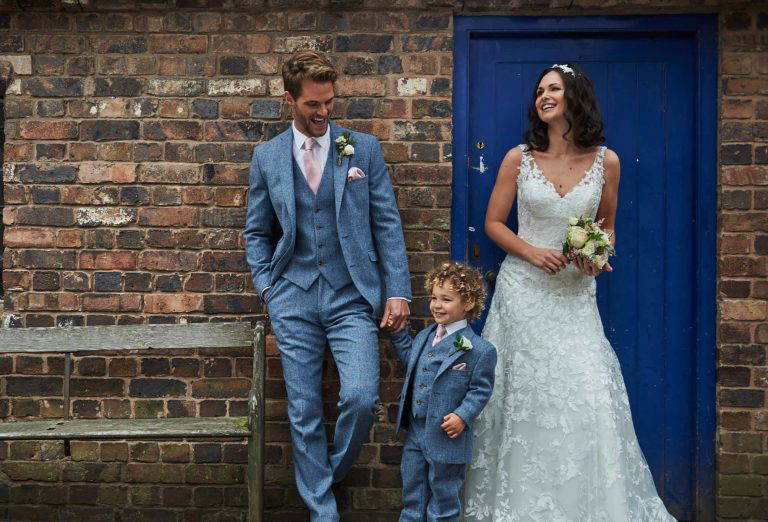
Our tweed suits come in blue, grey, green and brown. Each of the four looks quite different once you have it on and see it in daylight. The green looks deeper and more earthy than you expect from a photo, the grey is the most versatile, the blue is the smartest and the easiest to dress up, and the brown is the warmest and the most traditionally country.
Where tweed works
Tweed belongs at a wedding with some countryside in it: a barn, a marquee, a manor house with gardens, or a village church followed by a reception in a field. Walk across gravel in a heavy wool suit, and it feels right. Do the same in a city hotel ballroom, and it can look out of place.
Tweed also works in cooler months. Autumn, winter and early spring are when tweed comes into its own, because the fabric is heavy and warm. Our guide to winter wedding attire explains why heavier fabrics like wool and tweed suit the season. If your wedding is in July and the forecast says 28 degrees, I’d steer you towards something lighter. That’s why we always talk about fabric before colour, and our groom’s guide to summer weddings goes into that in more detail.
When another suit might suit better
- A hot summer day, for the reason above. Even a three-piece in tweed will feel heavy after two hours of photographs.
- A very formal or black-tie wedding. Tweed is relaxed by nature. If the invitation says black tie, you want a dinner jacket.
- A wedding where you want the groom to look sharp and slim. Tweed has texture and body, and it looks best on a comfortable, classic cut rather than a skin-tight one.
Two-piece or three-piece?
For a tweed wedding, I’d nearly always say three-piece. The waistcoat is part of what makes it look right. It also means that when the jacket comes off for the evening, you’re still properly dressed. The two-piece is fine if the venue is warm or you’re worried about the heat, but you lose some of the character. If you’re still deciding what the groom should wear overall, our guide to choosing a groom’s suit for your wedding covers the wider options.
Getting the accessories right
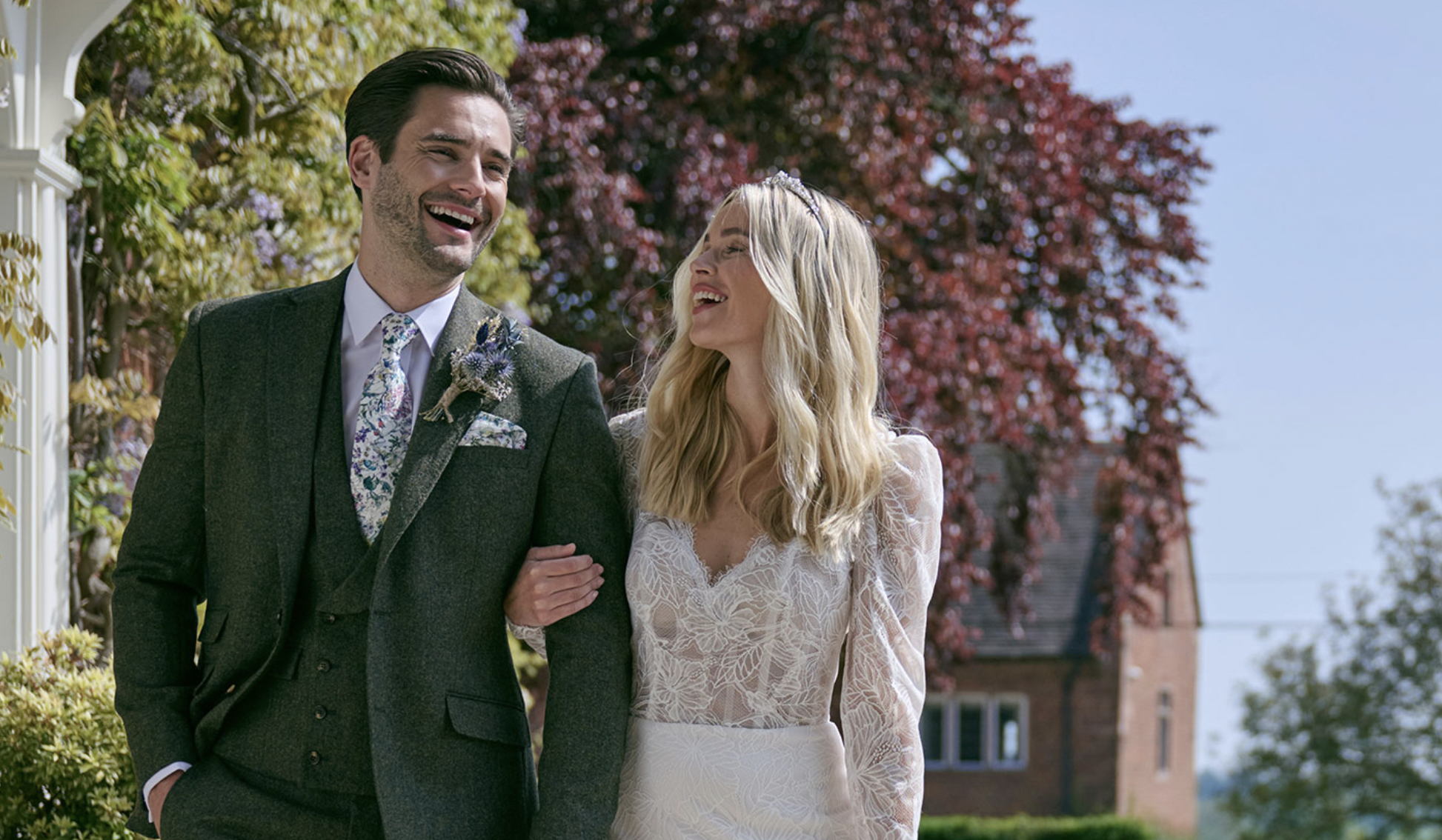
Tweed does well with a bit of warmth in the colours. Think knitted or wool-blend ties, earthy or muted shades for the tie and pocket square, and brown shoes rather than black. If you’re stuck, bring a swatch or a photo of the bridesmaids’ dresses and the flowers, and we’ll sort it in the fitting room.
Tweed for the groom, or the whole party?
You don’t have to put everyone in tweed. A popular option is to put the groom in tweed and the rest of the party in a lounge suit in a matching colour, which also helps the groom stand out. There’s more on that in our post on how to differentiate the groom from the groomsmen. If you’re weighing the two up, try both at your fitting, and you can see everything we offer on our wedding suit hire packages page.
Book a fitting before you commit
Tweed looks very different on than on a hanger, and colour reads differently under shop lights than it does in a field. Book a fitting at 18 Albert Street, Rugby, try all four colours, and see which one suits you. It takes about half an hour, and it’s much better than choosing from a photograph. We see grooms from across Warwickshire and beyond, so if you’re not local, our page on suit hire in Warwickshire will tell you more about how we work.